Another consideration before you purchase will be whether or not you want to use a solvent-based MSA varnish or a water-based polymer one. Golden also make an MSA varnish in Matte, Satin and Gloss. If you choose to use an MSA varnish you will need to use a mineral spirit solvent for removal. Solvent resistant gloves and protective clothing are also recommended. You can use Gesso for your white on the sides and front, where you will eventually adhere your cyanotype. You can also apply an acrylic color instead of the Gesso, or over the Gesso.

Gesso tends to be rather matte, so I usually paint over it with an acrylic paint. The paint's sheen is usually semi-gloss and easier to clean if needed. When you adhere paper to the panel you can use any acrylic gel.

Gels are thicker, but you can apply them thinly and then they stay wet longer, reducing the risk of wrinkling the paper. If the ink is watersoluble you will need to spray a solvent-based varnish (like Golden's Archival Gloss Varnish Spray) over the print. If it is not water-soluble then you can still spray the same varnish I just mentioned, but you also have the option of brush applying a non-toxic varnish such as Golden's Polymer Varnish. If you plan to frame it behind glass when finished, then you do not have to varnish. I like varnishing because the varnishes I use have a UV protection in them. You can use glass with UV protection but those are expensive, and it's fairly easy to varnish.

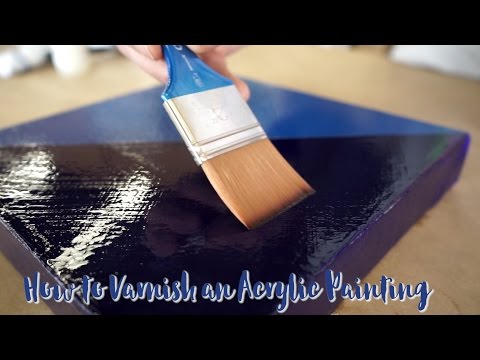
For an absolute beginner, the lack of knowledge of varnishes can prove to be rather lethal. We need to keep in mind that acrylic paintings need an isolation coat to get a removable varnish finishing while oil paintings do not need the isolation coat. This is because the oil varnishing coat can easily be removed by using the solvents. While traditional hard varnishes on oil paintings can give a very refined and glossy look, they are often vulnerable to yellowing and cracking, and can be hard to remove over time. Varnishes are used as a finishing layer to protect artwork from discoloration, moisture, dirt, and UV rays.

Which varnish you choose will affect the finished look. A glossy finish will make colors appear more vibrant, matte will reduce glare and soften colors, and a satin varnish will provide a finish somewhere between glossy and matte. Make sure work is thoroughly dry before applying, and allow time for the varnish to dry completely after each application. Please note that most of these products are extremely flammable and must be used with adequate ventilation. Our picks below will help you find the best spray varnish for your project.

For acrylic paintings, it is recommended to apply an "isolation coat" between the finished painting and the varnish. This consists of a coat of clear acrylic medium evenly applied over the entire surface. The purpose of the isolation coat is to protect the acrylic painting underneath from chemicals which may later be used to remove varnish. While oil paintings naturally are not threatened by chemicals used to remove their varnishes, acrylic paintings can be.

The isolation coat is used as a buffer to lessen the threat to the artwork. Before varnishing your painting and if you are using a removable varnish, it is advisable to apply an isolation coat first. The isolation coat has a glossy and transparent finish and will provide a level base on which to varnish onto.

This permanent protective barrier seals all of the porous surface and will protect your painting if you ever need to remove or replace the layers of varnish above it. Varnish removal will involve using a solvent, which could damage the actual painting below if you do not create a permanent protective barrier. Using a gloss isolation coat, especially before applying a matte or satin varnish, will prevent a cloudy appearance from occurring in the varnish layer.

Acrylic paints dry out softer than the oil paints and hence they attract a lot of dust and dirt. This is one of the major reasons why artists choose to varnish their acrylic paintings either with removable or with non-removable varnish. For acrylic paintings, in case of thick paint, give a couple of weeks to dry out the paints before applying the isolation coat . Once the isolation coat completely dries , proceed with another coat. While many artists use sponge or rolls for applying the varnish, these often lead to the formation of bubbles, uneven coverage, etc. Yes you would follow the same procedure – sealing twice with a sealer .

I don't know what is available in Australia for sealers – but any gloss acrylic will work to seal the raw wood. Spray and paint options for varnishes are up to the user. I spray when there is heavy relief texture and/or the piece is small. One of the less common varnishing techniques is the application of what is called an isolation coat or varnish. Isolation coats are only applied to acrylic paintings, and are commonly used by art conservationists as well as regular artists. You can definitely seal the back and sides of your wood panel if they are still raw.

Your acrylic painting on the face will act as a seal and will keep moisture from getting to the wood from the front. The sealing coat between the wood face and your first layer of paint will help to keep any staining. But this happens right away, within minutes, so if your painting is finished and you don't see any yellowing then all is fine. The yellowing only happens while applying the wet layers.
By the way, I am assuming when you write "wood canvas" you are referring to a wood panel – an all wood painting surface? You also asked about your newly started panels that only have one base layer of acrylic. The staining only happens when you apply thick layers of acrylic, or many layers of thin acrylic. The stain is only visible when you have areas of white or light colors. If you will not be using acrylic thickly, or will not have any light areas then you don't need the stain sealer coat. If you want to play it safe, you can easily apply a coat of gloss acrylic over your base layer.
Then this will keep any staining from moving into subsequent layers. Sealers are glossy and non-absorbent and keep one layer separate from the next. Primers are pigment loaded to create a coating that adds adhesion strength, meaning it allows one layer to seep into the previous one for extra sticking power.
What To Put On Acrylic Paintings To Protect Them Basically, there is no such thing as a "clear gesso" even though there are products sold with this name. If it is clear, then it is a medium, not a primer, and it will coat a surface – which makes it a selaer not a primer. I know I'm being a stickler with details here, but I feel it's helpful to know why you apply a certain product and what benefits it is meant to do. Your biggest tip is that pretty much anything glossy will seal, and anything matte or satin will absorb. A good rule of thumb even though there are exceptions. GAC100 is glossy, it is a medium, so it will seal wood or layers of paint.
It is not a primer and won't help adhesion if that's what you're looking for. Applying GAC100 on the front and/or back of linen canvas will seal the canvas. It will allow your paint to sit on top of the surface instead of soaking in. Your paint will stay wet longer and your canvas will be protected from moisture entering from the back – so good thing to do. If you apply it with a smooth brush, using several coats, it is a thin enough product that you probably won't need to sand it to remove brushstrokes. Again, you can very well seal your canvas and SKIP priming altogether if you don't want to cover the canvas with white.

Using a "clear gesso" is a way, in my opinion, to get people to buy a product that is not needed. Acrylic and oil paintings can and should be varnished for preservation and aesthetically appealing outcomes. You cannot varnish watercolor or gouache paintings and drawings as effectively. For starters, these paints tend to imbibe the varnish and this shall lead to discoloration and permanent alteration in the color scheme of your artwork. Also, if you are looking for a removable varnish, an isolation coat before applying another varnishing layer works well with acrylic paints. Varnishing on a fully dried oil painting surface is also removable while there is no way to remove varnish from gouache and watercolor paintings .

Since the piece is from 1944, it probably uses oil paint. Since it has relief texture, a spray varnish would be the best. Brush applications would work if the texture is slight. If the texture is raised quite a bit, then brush applying may create puddles in the crevices.

Golden's MSA Varnish comes in a spray called Archival Varnish. I recommend using only gloss, so the Archival Varnish Gloss will work very well. Matte varnishes contain a white powder that may not work well over the old painting. Another consideration is the back of the painting.

If not, you may want to apply an acrylic gloss medium over the canvas back to keep any moisture entering the painting through the back. For use on stairs I suggest using commercial products that are made for high traffic and frequent use, instead of any fine art products. For step 2 instead of GAC 100 use commercial sealers like Kilz. Again, the can label should tell you if you still need to prime over it. If you do use a commercial primer, not fine art products.

Even if you are gluing the backs of the panels to the stairs it's good to seal so the glue doesn't seep into the wood quickly which means it won't be present enough to glue. Black or white priming doesn't matter – it's up to you as a preference for how you want your colors to show up – bright or darkened. Your paints will last according to the quality of paints you select. Cheap student grade will probably peal off, flake off or fade. They will do this with artworks on the wall and especially under foot on a stairs.

Here I would use a good quality acrylic paint like Golden. Golden is the best in my opinion because they are committed to only use high quality ingredients in all their products. Final seal should be something that is meant to use for wooden stairs.

Go to a high quality furniture or wood working site or store and ask for the best sealer for wood stairs. You would follow directions on that product's container. My only concern is the danger of causing someone to slip.

Also can anyone really see your painting as they are using the stairs? Would it be a good alternative for you to do an painting on panel, then frame it and hang it on the wall opposite the top stair? By the way, there are oil cloths you can paint that create floor mats or floor rugs.

These are meant to not slip and are also created for high traffic. I suggest looking up painted oil cloths for floor mats. This isn't my forte but I'm sure you will find some good information online from those that work this way.
Good luck and feel free to post again if you find any good information out to share. Adding a final coat of varnish is the perfect finishing touch for your acrylic painting. Varnish provides a durable layer that will give your painting extra protection against damage. Some acrylic painters also choose to add an isolation coat between the painting and varnish layer. This allows the varnish to be removed for cleaning without damaging the paint layer beneath. In these circumstances you would need to ensure that you are using a non-permanent, removable varnish – for example, soluvar.

Isolation layer or not, it is important that your painting is left to dry thoroughly before varnishing. Much of the same advice applies to varnishing an oil painting. Wait until it is bone dry, usually 6 months to a year. Practice first to get good at coating evenly and feathering in. Use a modern synthetic resin varnish for oil paintings, the old natural resins like damar varnishes usually yellow and deteriorate and most people have given up on them. The surface of an oil painting is more durable than an acrylic painting but a varnish is still a good idea for protection.

If your aesthetic decision is to not varnish because you don't like the glossy surface you can get a matte varnish for oil. But that doesn't mean they will be easy to remove. Varnishes for oil paintings are removed with the same solvent that will remove the paint. The varnish should only be removed by a professional restorer using a cotton bud. Slowly, slowly, you stop when the cotton bud has colour on it. You may be able to clean an old, dirty varnish by removing a thin layer of it with mineral spirits, without removing the whole thing.

For acrylic paintings Golden polymer varnish can be removed with household ammonia which will not dissolve the paint. But it still changes the surface and the one time I had to remove it because I made a mistake with the varnish, the surface looked dull and roughed up a bit. Polymer Varnish is designed as a topcoat for acrylic paints and offers a removable protective surface to the relatively soft acrylic paint layer.

It has a harder film than most acrylic paints, which diminishes the susceptibility of the surface to dust and dirt, and provides increased protection from scratching, marring and moisture. It has adequate flexibility to withstand normal handling conditions, including loose rolling. The product is not recommended for use on furniture or other surfaces subject to physical contact during use. A removable varnish will allow you to clean your painting and re-apply the varnish in the future. At this point if you wish, you may change the paintings surface appearance say from a matte varnish to a gloss or satin finish .

You must apply an isolation coat if you are going to remove your varnish so the underlying paint layer isn't damaged. The removable varnishes are just as protective as the permanent ones. There are a lot of times when the completed artwork does not come together aesthetically. This happens when either the quality of the surface is a little bit uneven or the painting is glossy in some parts while it has a matte finish in the others. There exist some acrylic pigments that have a more lustrous finish than the others.


No comments:
Post a Comment
Note: Only a member of this blog may post a comment.